IV Drip at Home: A Convenient Way to Receive Hydration Therapy
You step off a long flight, reach home, and suddenly feel exhausted. Your head feels heavy, your energy is gone, and drinking water does not seem to help much.
Many people experience this after travel, illness, or a stressful week. In many cases, the real issue is dehydration.
Most of the time, rest and fluids solve the problem. But sometimes the body needs faster hydration. That is where an IV drip at home becomes an option. Instead of going to a clinic and waiting for treatment, fluids can be given while you stay at home and recover.
For people with busy schedules, this approach can make medical care easier to handle.
What Hydration Therapy Does
Hydration therapy is a medical way to restore fluids in the body. During the treatment, a sterile fluid solution enters the bloodstream through a small IV line placed in the arm.
The body absorbs the fluids rapidly since they enter the bloodstream immediately. For this reason, when a patient has lost too much fluid, doctors use this procedure.
Fluid loss can happen for many reasons. Some of the common reasons are as follows:
- Long travel and jet lag
- Vomiting
- Stomach infections
- Diarrhea
- Heavy workouts
- Spending long hours in hot weather
Even a small fluid loss can affect how the body feels. Research shows that mild dehydration can reduce focus and cause fatigue.
Situations Where IV Drips Are Often Used
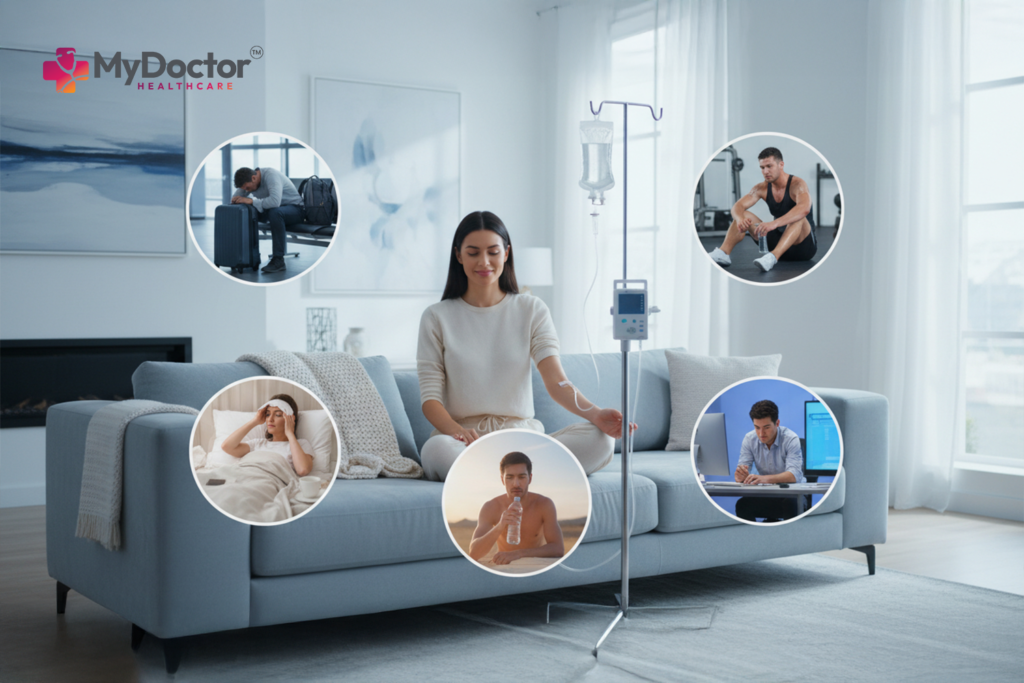
IV hydration is not only used in hospitals. Many people now receive it when the body needs help recovering. Everyday situations in which people consider IV drips are as follows:
After Long Travel
Airplane cabins are very dry. During a long flight, the body slowly loses moisture. This is why travelers sometimes feel weak, dizzy, or extremely tired after landing.
After Intense Physical Activity
Athletes and fitness enthusiasts lose large amounts of fluid through sweat. Replacing electrolytes quickly can help the body regain strength.
While Recovering from Illness
When someone has a fever, food poisoning, or stomach infections, dehydration can happen quickly. In these cases, IV therapy at home allows a person to rest while receiving fluids.
During Periods of Extreme Fatigue
Professionals with hectic schedules often neglect to stay properly hydrated after long workdays. This could eventually result in headaches, fatigue, or poor energy.
When dehydration becomes noticeable, hydration therapy may help restore balance.
How an IV Drip at Home Usually Works
Many people feel unsure about the process because they have never received hydration therapy before. In reality, the session is usually simple and calm.
A typical visit may include the following:
Brief health discussion
The healthcare professional asks about symptoms and general health history.
Preparing the equipment
Sterile fluids and IV tools are prepared before the treatment begins.
Starting the IV drip
A small IV line is placed in the arm, allowing fluids to flow slowly into the bloodstream.
Monitoring during the session
The provider checks how the patient feels and makes sure everything is comfortable.
Short rest after the treatment
Once the drip is complete, the patient can relax while the body absorbs the fluids.
If needed, some services also provide access to a doctor on call before arranging the session.
Why Some People Prefer IV Drip at Home
When someone already feels weak or dehydrated, traveling to a clinic may feel exhausting. This is one reason why many people choose IV drip at home services.
Receiving treatment at home can make the experience easier.
Some of the common reasons why people prefer at-home IV therapy are as follows:
- Avoiding travel when feeling unwell
- Staying in a comfortable and familiar space
- Flexible appointment timing
- No waiting in crowded clinics
Most hydration sessions last between 30 and 60 minutes. During that time, the patient can simply rest or sit comfortably.
Healthcare providers offering these services usually ensure that trained medical staff handle the procedure safely.
The Role of Medical Supervision
Even though the setting is a home, hydration therapy still requires proper medical oversight.
Professional services often include the following:
- Trained nurses or medical technicians
- Sterile medical equipment
- Monitoring throughout the infusion
- Medical advice when needed
Some services also arrange a consultation with a doctor at home when patients require a full medical evaluation.
Healthcare providers in the UAE, like MyDoctor Healthcare, have started offering these options to make certain treatments more accessible while maintaining medical standards. They offer such coordinated care, which connects patients with trained professionals for home-based medical services.
People Who Often Use Hydration Therapy
Hydration therapy is used by different groups of people depending on their lifestyle and health needs.
Frequent Travelers
Long flights can disrupt sleep and reduce hydration levels.
Athletes and Fitness Enthusiasts
Intense training often leads to heavy fluid loss.
Busy Professionals
Long workdays sometimes mean people forget to drink enough water.
People Recovering from Illness
Conditions like flu or stomach infections can quickly lower the body’s fluid levels.
For many individuals in these situations, IV therapy at home offers a simple way to recover without leaving the house.
Questions People Often Ask
People who hear about hydration therapy for the first time usually have a few questions.
Is the treatment safe?
Yes, when trained medical professionals perform it using sterile equipment.
How long does a session take?
Most sessions last between 30 minutes and one hour.
Do I need medical advice first?
Some services arrange a consultation with a doctor on call before scheduling treatment.
Can IV therapy replace drinking water?
No. Regular hydration through water and healthy fluids is still essential.
Hydration in a Busy City Environment
Life in major cities often moves quickly. Long work hours, travel schedules, and high temperatures can easily lead to dehydration.
Because of this, healthcare services have slowly adapted. Instead of requiring every patient to visit a clinic, some treatments can now be provided at home.
An IV drip at home is one example of this shift. It allows people to receive hydration therapy without interrupting their daily routine.
Restoring Energy When the Body Needs It
Hydration plays a major role in maintaining energy and physical comfort. When the body loses fluids, fatigue and headaches often follow.