The Palm Jumeirah Monorail Reopens Following a 6 Month Shutdown
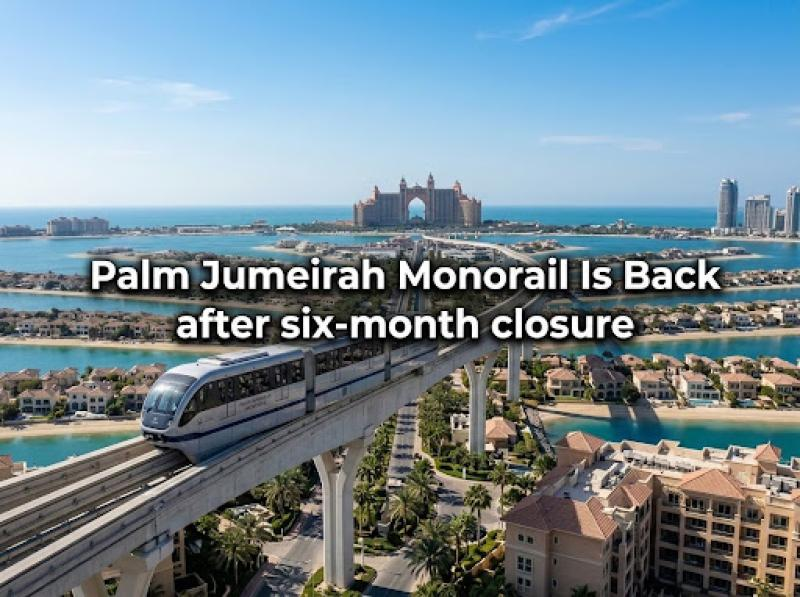
Six months is a long time to go without your only public transport link. Since January 2026, the roughly 35,000 residents of Palm Jumeirah, plus the 2.5 million visitors the island attracts annually have been getting around one of Dubai’s most iconic addresses entirely by road.Taxis, private cars and RTA’s Hala service filled the gap while scheduled maintenance and station modernisation work took place along the 5.5-kilometre elevated route. Now the Palm Monorail is back, and for anyone living on, buying or renting on Palm Jumeirah, its return matters.
What Has Actually Changed
The Palm Monorail reopened in early July after six months of closure. The shutdown was initially described as temporary but was extended without a confirmed end date, frustrating residents who had factored connectivity into their decision to live on the island.The line has now resumed its full route, connecting four stations: Palm Gateway, Al Ittihad Park, Palm Jumeirah Mall, and Atlantis Aquaventure. Trains run every 15 minutes. The end-to-end journey takes approximately nine minutes. The first service departs Palm Gateway at 9:00am and the final train leaves at 9:45pm, with Atlantis Aquaventure services starting at 9:15am and running until 10:00pm.
Tickets can be purchased online or at station desks. A one-way fare is priced at AED 10 per person, with a return at AED 15. Palm Gateway station offers more than 1,600 parking spaces, with three hours free for monorail users. It’s a practical option for visitors driving in from other parts of Dubai who want to avoid the island’s road congestion.
The monorail is privately operated and isn’t part of the RTA’s integrated Nol network. It connects to the Dubai Tram at Palm Gateway via a footbridge, but uses a separate ticketing system. For residents commuting off the island, that interchange adds an extra step. But it also connects Palm Jumeirah to the wider city network.
Why This Matters Beyond Transport
The monorail’s return matters to the property market, although the connection isn’t as direct as it might seem. Most Palm Jumeirah residents don’t commute by public transport. Private cars and taxis remain the main options for getting around.But the monorail serves a different purpose. It helps make the island feel more connected and practical for residents and visitors.
For hospitality and service workers across the island’s hotels, retail outlets and residential buildings, the closure added daily inconvenience and extra costs.Its return reduces that friction.For visitors, particularly those heading to Atlantis Aquaventure, the monorail offers an alternative to travelling by taxi.That visitor traffic also supports the retail and food and beverage businesses along the trunk, which in turn supports the commercial vitality of the residential communities around them.
From a property perspective, infrastructure and connectivity are important factors when assessing the long-term value of a location. Palm Jumeirah’s existing credentials, waterfront setting, branded residences and established community amenities are not in question. But any improvement to everyday liveability, including the reliable operation of its public transport link, feeds into the island’s attractiveness as a place to live as distinct from a place to invest. Today, those buyers are increasingly the same people, but they still ask different questions.
What It Means If You Are Buying or Renting on the Palm
For buyers exploring an apartment or villa for sale on Palm Jumeirah, the monorail’s return is a positive addition to the island’s infrastructure. It isn’t a reason to buy on its own. Palm Jumeirah’s appeal goes well beyond the monorail. But its absence over the past six months was a reminder that even established communities depend on reliable infrastructure. Buyers should consider this alongside the other factors that matter when choosing a home.
The villa segment on Palm Jumeirah has remained one of the more resilient parts of Dubai’s property market, with demand for villas continuing to hold firm. Villa resale values rose 16.2% year-on-year in Q1 2026, and Palm Jumeirah consistently ranks among the top communities for transaction value in weekly DLD data. The island’s limited supply of waterfront villas relative to buyer demand has kept pricing firm even through the broader real estate market disruption earlier in the year.
For renters, the monorail’s return adds another practical reason to consider Palm Jumeirah, whether they’re looking for a home on the trunk or considering a longer-term stay before buying. A functioning public transport link, access to retail and leisure, and a connection to the tram at Palm Gateway give renters more convenience.
Real estate agents in Dubai who specialise in Palm Jumeirah consistently emphasise that the building you choose matters as much as the location. The range of properties is also wide, from older trunk apartments to branded residences on the crescent priced at more than AED 40 million. The monorail serves primarily the trunk communities, which is where the majority of mid-market inventory sits. For property buyers in this part of the property market, apartments on the Palm trunk now have the added benefit of a restored transport link.