Termite Infestation in Dubai: Causes, Signs, and Prevention Tips
Introduction
Dubai’s warm climate creates near-perfect conditions for termites, and many property owners only discover the damage after months of silent activity behind walls or under flooring. Termite infestation in Dubai is a structural risk, not just a seasonal nuisance, affecting homes and businesses alike. Knowing the causes and warning signs early can save significant repair costs.
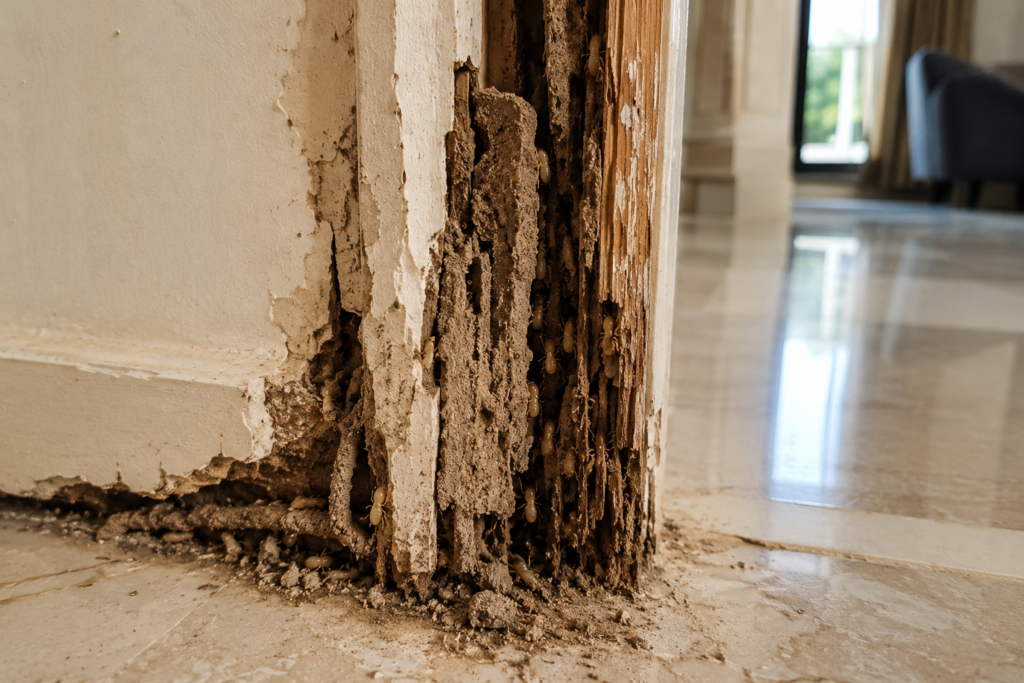
What Causes Termite Infestation in Dubai?
Termite infestation in Dubai is primarily driven by high humidity, irrigation-heavy landscaping, wood-based construction elements, and the region’s warm year-round temperatures. These conditions allow subterranean and drywood termite species to establish colonies quickly, particularly near villas, gardens, and older buildings.
Key contributing factors include:
- Moisture buildup from irrigation systems and poor drainage
- Wooden furniture, decking, and structural elements in direct soil contact
- Cracks in foundations that allow termites indoor access
- Nearby vegetation or mulch that attracts colonies
- Limited routine inspection in older properties
Why Termite Activity Matters in Dubai’s Climate
Dubai’s heat and humidity mirror the conditions termites naturally favor, so colonies here stay active almost year-round instead of slowing in winter. This is compounded by irrigated landscaping around villas, where regular watering near foundations creates the damp soil subterranean termites need to spread.
Industry associations, including the National Pest Management Association, note that termites cause billions of dollars in structural damage globally each year. This is why many Dubai property owners now treat termite control in Dubai as routine maintenance rather than an emergency-only measure.
Common Termite Species Found in Dubai
Not all termites behave the same way, and identifying the species affecting a property influences the treatment approach.
Subterranean termites are the most commonly reported species in the UAE. They build colonies underground and travel through mud tubes to reach wooden structures above ground.
Drywood termites live directly inside the wood they consume, often infesting furniture, door frames, and roof timber without needing contact with soil.
Both species can cause significant damage, but subterranean termites tend to spread faster due to their colony size and underground network.
Signs of Termite Infestation Homeowners Should Watch For
Early detection is the single most effective way to limit termite damage. Most infestations are discovered only after visible damage has already occurred, which makes routine checking essential.
Common signs of termites in a house include:
- Mud tubes running along walls, foundations, or pipes
- Hollow-sounding wood when tapped
- Discarded wings near windowsills or doors
- Small holes or blistering in wooden surfaces
- Frass (termite droppings) resembling fine sawdust
- Doors or windows that suddenly stick due to warped wood
If several of these signs appear together, a professional termite inspection is strongly advisable before damage spreads further.
Causes of Termite Infestation: A Closer Look
Beyond climate, several practical, everyday factors increase the likelihood of infestation in Dubai properties.
Excess moisture is the leading cause. Leaking pipes, poor ventilation, and overwatered gardens create damp environments that termites are naturally drawn toward.
Wood-to-soil contact is another major factor. Fences, decking, and structural timber touching the ground give subterranean termites direct access to a property.
Cluttered storage areas with cardboard, untreated timber, or firewood stacked against exterior walls also act as termite attractants, particularly in villa compounds and warehouses.
Termite Damage in Homes and Commercial Buildings
Termite damage often remains hidden until it becomes structural. In residential properties, this typically affects skirting boards, door frames, wooden flooring, and roof timber.
In commercial settings, warehouses and buildings with wooden pallets or storage units face higher exposure, since untreated wood provides an ongoing food source for colonies.
Left unaddressed, termite damage can compromise structural integrity, reduce property value, and lead to costly renovation work that routine pest control could have prevented.
Practical Termite Prevention Tips
Prevention is significantly more cost-effective than repair. A few consistent habits can meaningfully reduce infestation risk.
- Fix leaking taps, pipes, and irrigation lines promptly
- Maintain a gap between soil, mulch, and wooden structures
- Ventilate crawl spaces and basements to reduce humidity
- Store firewood and timber away from exterior walls
- Schedule periodic termite inspection services, especially for villas and older buildings
- Treat exposed wood surfaces with termite-resistant coatings during renovations
These steps align with how to prevent termites more broadly, regardless of building type or location, though Dubai’s climate makes consistency particularly important.
Termite Treatment Methods That Actually Work
When prevention isn’t enough, and an infestation is already active, the treatment approach depends on the termite species and extent of damage.
Liquid soil treatments create a chemical barrier around a building’s foundation, targeting subterranean termites before they reach structural wood.
Baiting systems use slow-acting bait stations placed around a property, allowing termites to carry the treatment back to the colony.
Localized wood treatments are typically used for drywood termite infestations confined to specific furniture or structural elements.
Professional termite control in Dubai typically combines inspection, targeted treatment, and follow-up monitoring rather than relying on a single method, particularly for properties with recurring humidity or landscaping-related risk factors.
Best Solution: Combining Prevention With Professional Inspection
The most reliable defense against termite infestation is a combination of consistent preventive maintenance and periodic professional inspection. DIY measures can reduce risk, but they rarely detect early-stage colonies hidden within walls or under flooring.
Property owners can also browse general pest management services via Allied Pest Control to compare available options.
Conclusion
Termite infestation in Dubai is closely tied to the region’s climate, irrigation habits, and construction materials, making early detection and consistent prevention essential. Recognizing the signs and scheduling professional inspections can prevent minor issues from becoming costly repairs.
Frequently Asked Questions About Termite Infestation in Dubai
How often should termite inspections be done in Dubai?
Most pest control professionals recommend an annual inspection for villas and older properties, with more frequent checks for buildings with a known history of termite activity.
Can termites cause damage that isn’t visible immediately?
Yes. Termites often feed on wood from the inside out, so visible damage frequently appears only after significant structural weakening has already occurred.
Are DIY termite treatments effective?
DIY sprays may address surface-level activity but rarely reach the underground colony, making professional treatment more reliable for long-term control.
What is the difference between termite pest control and general pest control?
Termite pest control focuses specifically on colony detection, soil treatment, and structural protection, whereas general pest control covers a broader range of household pests.