Choosing the Right LED Driver for Furniture Lighting Projects
Selecting the correct LED driver for furniture is one of the most consequential decisions in any lighting installation. The driver regulates voltage and current to keep LED strips performing consistently and safely get it wrong and the result is flickering, premature failure, or uneven brightness. Get it right and the system runs efficiently for years. This guide covers the key technical considerations every contractor, joiner, and designer needs to understand before specifying a driver for cabinet and wardrobe lighting projects.
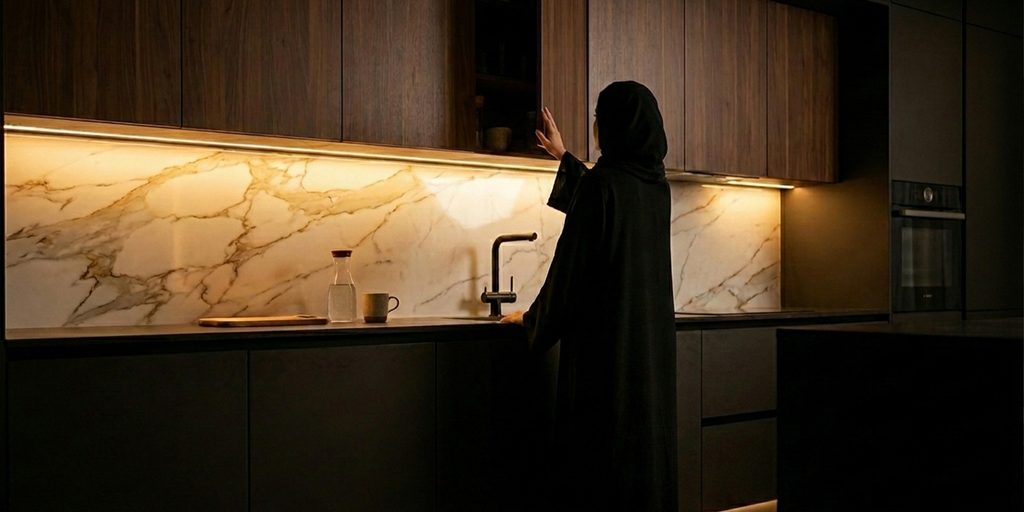
What Is an LED Driver for Furniture and Why Does It Matter?
An LED driver for furniture is a power conversion unit that transforms mains alternating current into the regulated direct current that LED strips require. Unlike a simple transformer, a quality driver maintains stable output voltage regardless of temperature changes or load variation both common in enclosed furniture cavities.
Cabinet interiors, wardrobe recesses, and under-shelf channels all restrict airflow. Without a driver rated for these conditions, heat accumulates and degrades the LED system well ahead of its rated lifespan. The driver must be matched to the strip’s voltage, wattage, and environment from the outset.
BERGOPRO stocks a curated selection of LED driver for furniture units alongside its complete furniture lighting range, giving specifiers access to matched, tested components rather than mismatched parts from multiple suppliers.
Constant Voltage vs Constant Current: Understanding the Difference
The first specification decision is driver type: constant voltage or constant current.
1. Constant Voltage LED Driver for Furniture
The majority of LED strip lights used in furniture applications run on constant voltage typically 12V DC or 24V DC. A constant voltage driver maintains a fixed output voltage while allowing the current to vary with the load. This is the standard for kitchen cabinet strips, wardrobe lighting, and display unit installations.
Output voltage must match the strip exactly. A 24V strip connected to a 12V driver will underperform. A 12V strip connected to a 24V driver will fail immediately.
2. Constant Current Drivers
Constant current drivers maintain a fixed output current while voltage varies. In furniture lighting contexts, these appear in bespoke joinery where individual LED chips are wired in series rather than continuous strip runs. Most standard furniture installations use constant voltage drivers and constant current units are the exception.
Wattage Calculation: Sizing the Driver Correctly
Under-sizing a driver is one of the most common installation errors. Every LED driver for furniture must be rated at a minimum of 20% above the total connected load to prevent the unit from running at thermal capacity and shortening its service life.
1. Calculating Total Load
Multiply the strip’s wattage per metre by the total run length. Add 20% to establish the minimum driver wattage. A 10W per metre strip across a 3-metre run produces a 30W load; the minimum driver rating is therefore 36W. Specifying a 40W unit provides adequate headroom without unnecessary cost.
2. Multiple Circuits From One Driver
In larger installations, a single driver can feed multiple strip circuits provided the total connected load stays within the 80% threshold. Each circuit should be individually fused to protect against localised faults.
Dimmable Drivers for Furniture Lighting
Dimming is increasingly expected in residential furniture lighting. A dimmable LED driver must be compatible with the specific dimming protocol used in the installation.
Trailing-edge dimming is the standard for LED furniture lighting in residential projects. It produces smooth, flicker-free output without the buzzing associated with older leading-edge dimmers designed for halogen loads. For commercial and smart-home applications, DALI and 0–10V analogue dimming offer circuit addressing, scene setting, and building management system integration.
BERGOPRO’s LED driver range includes dimmable options across constant voltage outputs, allowing the correct specification for each project type.
IP Rating and Physical Format
1. IP Rating for Enclosed Furniture Spaces
Drivers installed inside cabinet plinths or enclosed recesses must carry an appropriate IP rating. IP20 is the minimum for dry enclosed furniture cavities. Where the driver is positioned near a kitchen sink or splashback area, IP44 or above is required.
2. Driver Form Factor
Slim-profile drivers are essential in furniture applications where internal depth is limited. Standard brick-format drivers suit plinth voids and larger wardrobe bases. For very tight installations, compact inline drivers can be routed alongside the LED strip itself, removing the need for a dedicated housing cavity.
Sourcing a Reliable LED Driver for Furniture Projects
Unbranded drivers may appear cost-effective at specification stage but generate callbacks and replacement costs that outweigh any initial saving. As a specialist furniture lighting supplier to the GCC market, BERGOPRO provides drivers selected for reliability in regional conditions where ambient temperatures regularly stress lesser components. The range is stocked alongside compatible LED strips and aluminium profiles, making it straightforward to specify a complete, matched system for any project.
Conclusion
The LED driver for furniture is not a secondary component; it defines the performance and longevity of the entire lighting installation. Specifying the correct voltage type, sizing the wattage with appropriate headroom, matching the dimming protocol, and selecting the right IP rating are all decisions that determine the final outcome. BERGOPRO’s furniture lighting and driver range gives specifiers across the GCC the components and technical knowledge needed to get every cabinet lighting project right from the first fix.