How to Check If You Are Eligible for a Foreign Visa Before Applying from the UAE
When looking at flights for an international trip from the UAE, the excitement quickly fades attempting to navigate the visa maze. Which visa do you need? Are you eligible? Do you apply to this embassy? Unfortunately, for the many expats in Dubai, Abu Dhabi, and the UAE, the answers to the above questions are critical for the difference between the approval notification and a lengthy, expensive process to find out. Using the right online tools before you apply visa from the UAE can save you weeks of effort and protect your travel record from an avoidable rejection.
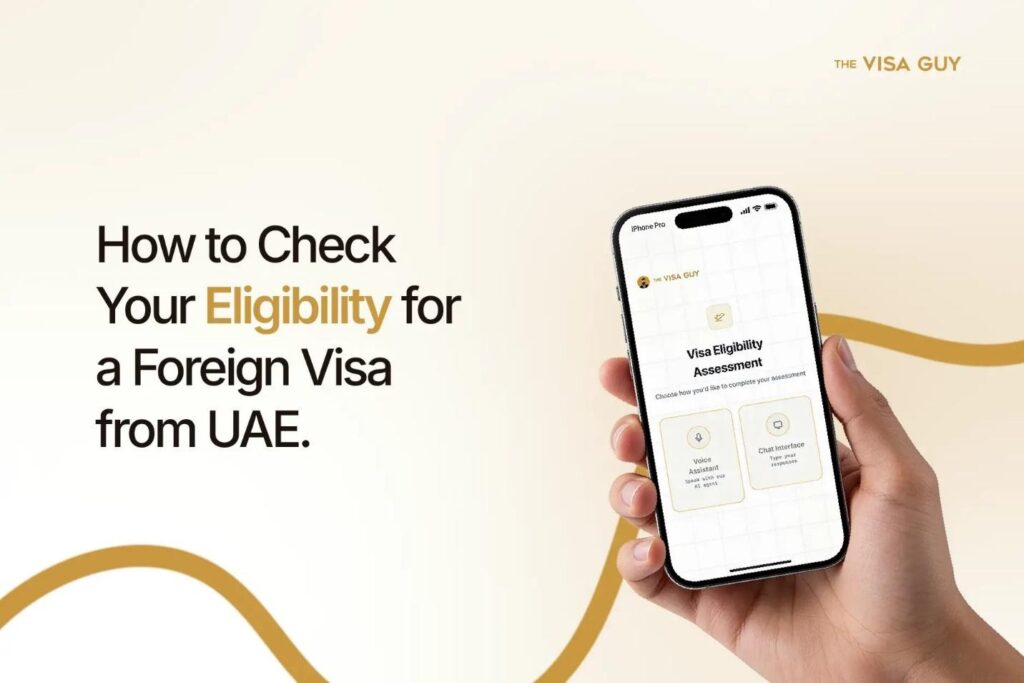
This guide offers a step-by-step way to assess your visa eligibility before you submit any documents.
Why Checking Eligibility First Matters
Many people think that being a resident of the UAE, having steady employment, and a healthy bank statement mean that getting a visa to any country is now just a paperwork process. Unfortunately, this line of thinking has resulted in many wasted applications and an abundance of annual visa rejections.
There is no universal solution to visa eligibility. This is based on your passport, your residence visa in the UAE, the duration of this visa, your travel history, and the destination you wish to travel to. For instance, a Filipino nurse on an employment visa in Dubai and an Indian freelance permit holder in Abu Dhabi can have completely different eligibility profiles, even if they are applying for the same trip to the same country.
Knowing your eligibility before applying allows you to see where you stand before losing money on application fees, travel insurance, and hotel reservations that are non-refundable in the event of a visa denial.
Step 1 – Know Your UAE Residence Type
The first thing to figure out is the type/category of your UAE residence visa. This is more important than many realize.
The Schengen consulates and UK and US visa and immigration systems closely scrutinize applicants’ employment and dependent UAE visas versus UAE partner, investor, freelance, golden, and remote work visas. Each type/category carries a different meaning and requires a different approach to documentation and evidence.
Holders of the employment visa generally have the most solid and strongest base profile. This is due to an employment contract, a verified salary, and a compelling travel reason for return to the UAE. Freelance and investor visas may also be approved, but carry additional and more extensive requirements for evidence and supporting documentation of income. Dependent visa holders – generally spouses and children – must support the employment contract of the principal visa holder.
First, confirm which category your residence falls under, and what that means for your travel to the destinations on your wish list.
Step 2 – Verify the Validity of Your UAE Residence
UAE residents are most frequently caught off guard by the validity of their UAE residency, making it one of the most overlooked eligibility requirements.
Visa applicants to many countries, especially Schengen Countries, the UK, and Canada, are required to show that their UAE resident visa has at least an additional 3 to 6 months of validity after their scheduled departure. Expat residents with visas that are due to be renewed in the travel country’s requested timeframe may find that their applications are flagged or even automatically rejected, even if the application is submitted with all other documents in order.
Before applying for any foreign visa, you should first check the validity of your Emirates ID and your residency visa. If either is due to be renewed, do that before applying for any foreign visa. Near-validity foreign visa applications, with residency visas that are near validity, are interpreted by consular authorities as a sign of instability, and the consular decision will most likely be in the applicant’s favor.
Step 3 – Using Online Visa Eligibility Checkers
Trying to determine your eligibility for a foreign visa by piecing together your eligibility with information found on the internet is neither the most accurate nor the most efficient way to assess your eligibility.
When assessing your visa eligibility, one of the most reputable tools available is the visa eligibility checker offered by The Visa Guy. This online tool allows you to quickly and efficiently determine your eligibility for a foreign visa by inputting your country of citizenship, UAE residency details, and travel history. In just a few minutes, The Visa Guy can provide you with tailored information about the specific visa category you need to apply for, as well as the required documentation and the appropriate embassy or consulate to submit your application to. Using such a reliable service can help streamline your visa application process and avoid common pitfalls.
This step tackles the most troubling aspect for UAE applicants. Most go to the wrong consulate, misrepresent themselves, and apply for the wrong type of visa. This can be avoided by submitting a visa application online that doesn’t require an appointment and takes significantly less time than one submitted incorrectly.
Step 4 – Travel History
Your travel history follows you. It is one of the first documents reviewed in a visa application and is heavily weighted when reviewing visa applications.
An impeccable travel history, with no overstays or violations, speaks to your ability to travel and abide by the conditions of a visa.
If you are a first-time applicant of the more scrutinized visa application, such as the Schengen visa or UK visa, you can reasonably expect to offset a weaker travel history with a stronger application in the areas of finances and employment. While it isn’t the most convenient exercise, it’s good to have this knowledge.
Previous visa refusals are important as well. Most applications ask whether you have been denied a visa in the past. Most people believe that skipping this question is the best way to answer the application. It is better to refuse this practice. Instead, state the refusal and explain what has changed regarding your application since the refusal occurred.
Step 5 – Honestly Evaluate Your Financial Situation
Meeting residency requirements and presenting the appropriate passport is not all that is required for eligibility. Your financial profile is reviewed. On the day of application, a higher financial balance is not all that the embassies are looking for.
A consistently rational financial history is what they look for. Financial documents spanning three to six months are reviewed. Salary deposits, a balance that reflects stated income, and the absence of large financial transfers within the weeks leading up to the application are some of the factors they look for.
A healthy financial balance is a common practice in application filing. Because visa officers review hundreds of financial applications, that practice is easily recognizable. Consistency of financial balance is of greater importance than an impressive financial balance.
Most consulates require stamped original bank statements. Statements printed from personal online banking are usually rejected. Do not submit your financial documents in an inappropriate format.
Step 6 – Choose the Correct Consulate to Submit Your Application
Most applicants in the case of Schengen visas particularly, often skip this step, and it affects their chances of application approval negatively.
The Schengen Zone combines 27 unique countries into a singular visa system, with applications routed through consulates based on where you will spend most of your time. If you plan to spend your time equally among several countries, you will need to apply through the consulate of the country where you will first enter the Schengen Zone. Applications routed through the incorrect consulate will typically be rejected due to a lack of procedural correctness before the application will be reviewed.
There are several different Schengen consulates present in Dubai, with each having its own unique visa processing time, appointment scheduling, and, in some cases, documentation requirements. Recognizing the specifics of where you need to apply and why you have to apply there will increase the chances of your application being approved.
Final Thoughts
Checking your visa eligibility before applying is the most important step in the visa application process, particularly in the UAE. International travel has never been more accessible based on the connections offered by the UAE.
Review your eligibility by assessing your credibility based on your residence, documentation, financials, and travel history. Before you submit your application, be sure to use an eligibility checker like the one The Visa Guy offers. You will avoid delays, receive more approvals, and most importantly, travel as you have planned.