Multilingual Websites: Essential UAE Market Domination
In the current globalized paradigm, only those businesses that keep up with the latest technology and international trends can survive. Digital technology has increased interconnectedness among various cultures, people, and countries. This means that appealing to a much broader demographic is a necessity, not a strategy.
UAE Demographics and Language Considerations
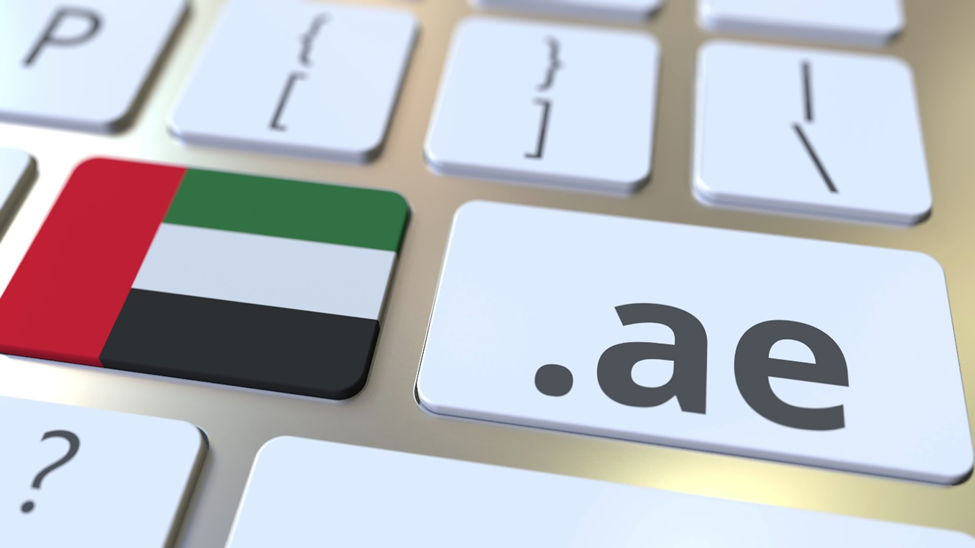
The need for a global focus is even more urgent for tourism-dependent economies, like the UAE. In addition to tourism, the UAE’s demographics also paint a picture of a society that houses many different cultures. Recent population data puts the UAE’s population at roughly 11.52 million. A significant portion of the population consists of expatriates. Ranking number one in the world in terms of the number of expatriates per capita. Some reports indicate that 88% of the UAE population are non-national residents.
Indians are the most common expatriate group, totaling 37.96% of the population. Other major nationalities include: Pakistanis, Filipinos, and Egyptians. People from all different backgrounds and nations interact and work together daily. Arabic may be the national language, used in official communications and within government agencies, yet English is the most widely spoken language across all seven emirates. English is a lingua franca that lets people communicate with each other, no matter whether their mother tongue is Hindi, Urdu, Tagalog, Farsi, or Bengali.
English allows disparate groups to communicate effectively with one another. This is especially true since many of these groups, including South Asians and Egyptians, have deep familiarity with English, having been former British colonies.
Expansion of Digital Marketing
Digitalization of the UAE economy is among the highest in the world. With 99% internet penetration, it is only natural that economic transactions largely occur in the digital sphere. COVID-19 shutdowns and the sheer convenience of ordering online have made digital marketing more relevant than ever.
Websites play a huge role in the digital ecosystem. They are particularly useful for providing customers with insight into the brand and its products and for assisting sales. While social media can be used to engage with customers in real time, most companies use it to drive traffic to their websites for actual sales.
A comprehensive digital marketing strategy employs a multi-pronged approach, with web design & development, combining various aspects of the digital landscape to maximize user attention and clicks. This is true for digital marketing globally. In the context of the UAE, demographic considerations need to be incorporated to optimize results. Digital marketing strategy has been hailed as a game-changer because, unlike traditional media, it requires minimal capital investment. The return on investment can be very high, and even small companies can compete effectively with brands that have global name recognition.
Yet, all these advantages can only be reaped with a tailored and impactful digital marketing strategy. One that is well-thought-out and puts the customer at the center. Companies like DynamoLogic are making huge strides in this area, serving clients in ways that maximize output and ensure long-term growth.
Multilingual Websites to Drive Growth
In such a marketing framework, multilingual websites are a basic requirement. Since there is no human contact to make a sales pitch and sell the product, companies must make their websites as user-friendly and convenient as possible. A multilingual option needs to be incorporated so website users can comfortably scroll, comprehend, and utilize the website to get what they want. It is not just about driving sales; it is about optimizing the user experience to increase returning customers. Sales expansion is not just about acquiring new customers; customer retention is a must to accelerate growth and build goodwill.
Multilingual and bilingual websites enhance user experience by improving communication. Users feel more comfortable when they encounter a website in a language they are familiar with. Even if it is not their native language, a secondary language is still more convenient than an entirely unfamiliar one.
Details like language are quite a big deal when you consider that website design is a science in which developers are hyper-aware of even the minutest details, like the placement of a button or the font style and size.
Incorporating Multilingual Websites for the UAE Market
The UAE’s digital landscape needs more websites developed with the region’s unique demographics and cultural and social features in mind. Websites must have at least two versions: Arabic and English. Aside from these, additional languages such as Hindi, Urdu, or Malayalam can be included to increase outreach.
Developing multilingual websites is not always as simple as translating the entire website. Sometimes, depending on the nuances of a language, a simple translation is not suitable. Native speakers of the language, those aware not just of its grammatical and syntactic rules but also of the contextual and social meanings of words and phrases, must be hired to seamlessly clone the website into that language. They must be well-versed in both languages to make the transition possible.
Additional language options are just a start in companies trying to become more inclusive. Many other features can be included to enhance the user experience. For example, offering the option to view a website in ‘dark mode’ (as some people prefer a darker aesthetic) or increasing the font size for the visually impaired. The idea behind every feature on the website is to make it easier for users to browse, make purchases, and submit queries.
Author Bio:
Mughees Qureshi provides copywriting services and writes quality articles and blogs. He is experienced in writing on topics related to all domains with impactful knowledge. He occasionally writes articles for Dynamologic Solutions.