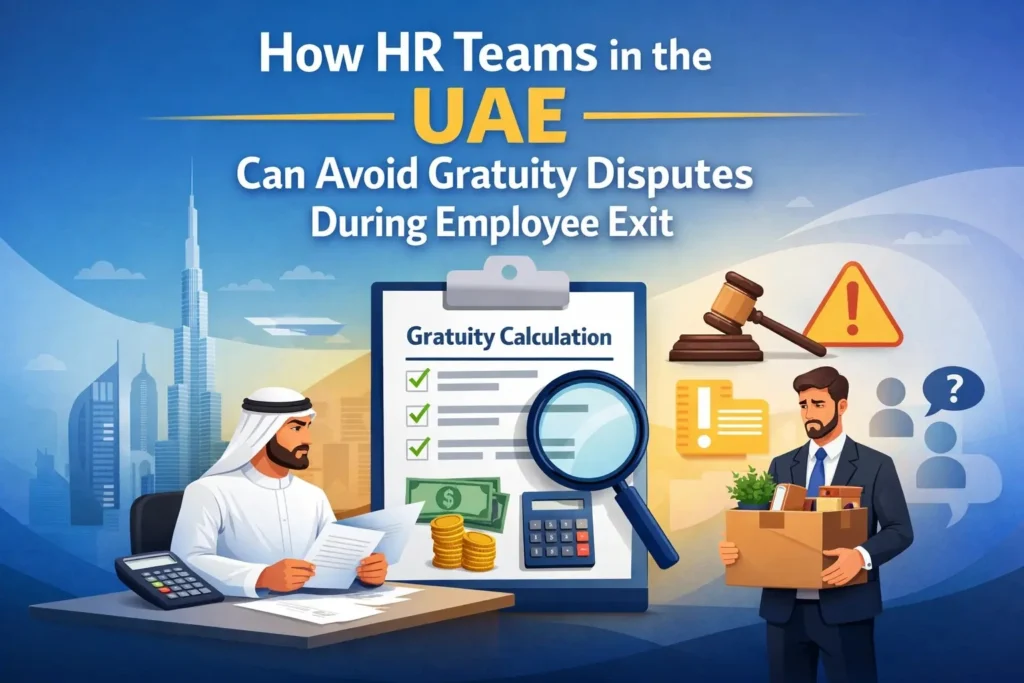
How HR Teams in the UAE Can Avoid Gratuity Disputes During Employee Exit
Employee exits are a sensitive time for both companies and staff. In the UAE, one of the most common causes of disagreement during this process is end-of-service gratuity. Even small calculation errors or lack of clarity can lead to disputes, delayed settlements, or strained relationships.
For HR teams, avoiding gratuity disputes is not just about legal compliance—it is also about maintaining trust, protecting company reputation, and ensuring smooth offboarding. Below are practical steps HR professionals in the UAE can follow to minimize gratuity-related issues during employee exit.
1. Understand the Employment Contract Clearly
The first step in avoiding disputes is knowing exactly what type of contract the employee is on. UAE labour law treats limited-term and unlimited-term contracts differently, and gratuity entitlements can vary based on:
- Contract type
- Length of service
- Reason for exit (resignation, termination, contract completion)
HR teams should always review the signed employment contract alongside current labour law provisions before starting any final settlement calculations.
2. Keep Accurate and Updated Employment Records
Many gratuity disputes start because of incorrect service duration. Missing joining dates, unclear leave records, or unpaid absences can all affect the final gratuity amount.
HR departments should ensure:
- Joining date is accurately recorded
- Any unpaid leave or long absences are properly documented
- Salary structure changes are clearly logged
Accurate records make calculations transparent and easier to explain to employees.
3. Use Clear Salary Definitions for Calculations
Another common issue is confusion over which salary components are included in gratuity calculations. Under UAE labour law, gratuity is usually calculated based on basic salary, not allowances such as housing or transport.
HR teams should:
- Clearly define basic salary in offer letters and contracts
- Ensure payroll records match contract terms
- Explain this clearly to employees during exit discussions
Setting expectations early reduces misunderstandings later.
4. Double-Check Calculations Before Final Approval
Manual calculations can lead to mistakes, especially when employees have long service periods or multiple salary revisions. A small error in gratuity figures can quickly turn into a serious dispute during final settlement.
To reduce this risk, many HR teams cross-verify their numbers using an UAE gratuity calculation tool that accurately applies current UAE labour rules and service duration logic. This allows HR professionals to confirm figures internally before sharing them with employees, helping avoid misunderstandings and last-minute corrections.
For HR teams handling multiple exits or long-tenured employees, using a standardized gratuity calculation method ensures consistency across cases and reduces the risk of disputes caused by manual variations.
Even a small miscalculation can create unnecessary tension, so taking a few extra minutes to review details carefully can save both time and effort later.
5. Communicate Early and Transparently
One of the best ways to avoid disputes is early communication. Instead of waiting until the last working day, HR teams should:
- Inform employees about how gratuity will be calculated
- Share an estimated figure in advance
- Allow time for questions or clarifications
When employees understand how their gratuity is calculated, they are less likely to feel confused or treated unfairly.
In cases involving domestic workers or household staff, gratuity calculations may differ slightly, so HR teams should refer to specific guidelines or use a dedicated domestic worker gratuity calculator to ensure accuracy.
6. Follow a Standardized Exit Checklist
A structured exit process helps HR teams stay consistent and compliant. A good employee exit checklist should include:
- Contract and service review
- Gratuity calculation and verification
- Final settlement approval
- Written confirmation shared with the employee
Having a standard process ensures no step is missed and protects both the employer and the employee.
7. Stay Updated With Labour Law Changes
UAE labour laws evolve, and gratuity rules may be updated over time. HR teams should regularly review official updates and adjust internal policies accordingly.
Relying on outdated rules is one of the fastest ways to create disputes. Continuous learning and compliance training for HR staff can prevent costly mistakes.
8. Document Everything
Finally, documentation is your strongest protection. HR teams should always keep written records of:
- Gratuity calculations
- Communication with the employee
- Final settlement acknowledgements
Clear documentation ensures that if a disagreement arises later, the company can confidently support its position.
Conclusion
Gratuity disputes in the UAE are often avoidable. By maintaining accurate records, using reliable calculation methods, communicating clearly, and following a structured exit process, HR teams can significantly reduce risk and ensure smooth employee offboarding.
A transparent and professional approach to gratuity not only ensures legal compliance but also leaves departing employees with a positive final impression—something every organization should aim for.
Frequently Asked Questions
How can HR teams in the UAE avoid gratuity disputes?
HR teams can avoid gratuity disputes by keeping accurate employee records, using the correct basic salary, and clearly explaining how gratuity is calculated before final settlement.
Can HR teams use online tools to check gratuity calculations?
Yes, HR teams often use online tools to cross-check gratuity calculations and reduce manual errors, especially during employee exit or final settlement.