How to Choose the Right Avian Vet in Dubai for Your Bird
You notice your parrot hasn’t touched his food since yesterday. He’s sitting low in the cage, feathers slightly puffed. You know something’s wrong, but when you search for an avian vet Dubai, you’re not sure whether that clinic down the road actually treats birds or just tolerates them between dog appointments.
That uncertainty costs birds their lives every year.
Choosing the right vet for your bird isn’t the same as picking a vet for your dog. Birds are medically complex, emotionally sensitive, and frustratingly good at hiding illness until they can’t anymore. This guide walks you through exactly what to look for, so when the moment comes, you’re already prepared.
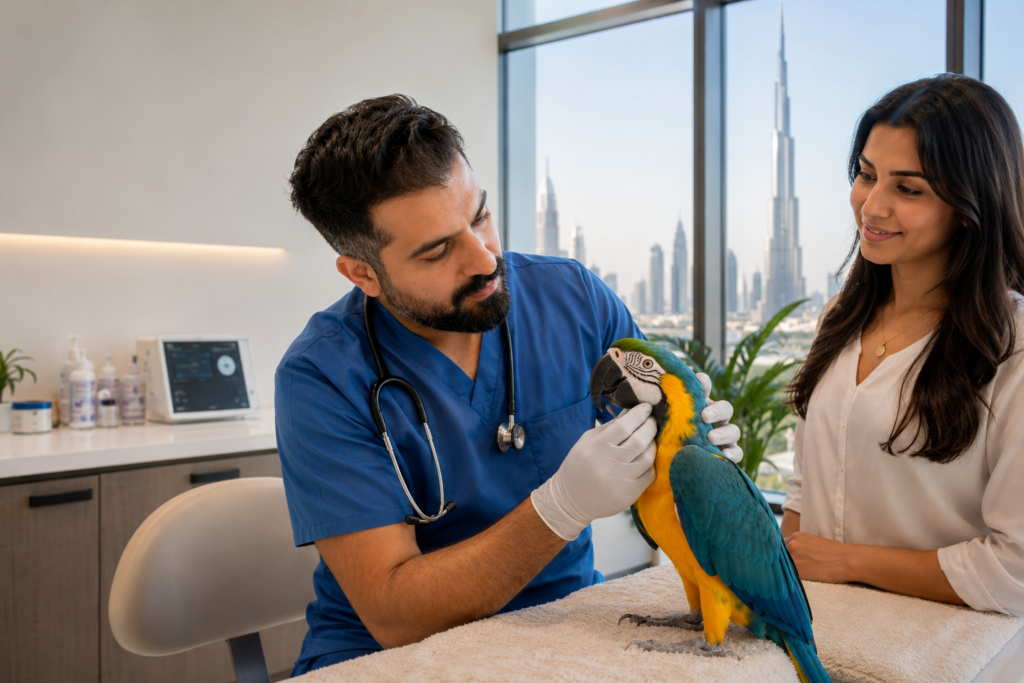
Why Your Bird Needs More Than a General Vet
The Biological Reality Most Pet Owners Don’t Know
Birds are not small mammals. Their entire physiology, respiratory system, bone structure, metabolism, and drug response operate differently from cats, dogs, or rabbits. A drug dosage that stabilizes one species can be lethal for a bird of similar size. Their air sac system means respiratory infections spread differently. Their hollow bones fracture in patterns general vets rarely encounter.
A vet who sees thirty dogs a day and two birds a month simply doesn’t accumulate the clinical instinct that avian medicine demands. That’s not a criticism, it’s just how expertise works. You wouldn’t ask a general practitioner to perform cardiac surgery. The same logic applies here.
Birds Hide Illness on Purpose
This is perhaps the most important thing a Dubai bird owner can understand. In the wild, a bird that appears sick becomes prey. So instinct suppresses visible symptoms until the body can no longer compensate. By the time your bird looks unwell, the disease has typically been progressing for days, sometimes weeks.
A qualified bird specialist vet in Dubai knows this. They don’t wait for obvious symptoms. They look at weight trends, droppings, feather condition, muscle tone, and behavioral shifts that most owners and many general vets overlook entirely.
What “Certified Avian Veterinarian” Actually Means in Dubai
Credentials Worth Asking About
The phrase gets used loosely. A genuinely certified avian veterinarian in Dubai has pursued formal postgraduate training in avian medicine typically through bodies like the European College of Zoological Medicine (ECZM) or the American Board of Veterinary Practitioners (ABVP) with an avian specialty track.
These aren’t short courses. They represent years of supervised casework, examinations, and continued education. When you’re evaluating a clinic, ask directly about the vet’s avian training background. A confident answer is a good sign. Hesitation or vagueness is not.
What a Proper Avian Clinic Looks Like in Practice
Beyond credentials, the environment tells you a lot. A clinic equipped for birds should have:
Separate waiting and recovery areas away from dogs and cats. Predator scent and noise alone can push a stressed bird into shock.
In-house avian diagnostics: blood panels are interpreted against avian reference ranges, not mammalian ones. X-ray capability. Crop cytology. These are standard, not premium.
Weight recording at every visit, weight loss is often the first measurable clinical sign in birds. If a clinic skips this, they’re missing a critical data point.
Nutritional consultation as part of the exam, the majority of preventable diseases in captive birds in the UAE come from the diet. If your vet never asks what your bird eats, something is wrong.
The 4 Red Flags That Should End the Appointment
Most people don’t know what bad avian care looks like until it’s too late. Here’s what to watch for:
1. No weight check. A vet who doesn’t weigh your bird isn’t tracking the most important baseline metric they have.
2. Antibiotics without a culture. Prescribing antibiotics blindly in birds can mask deeper infections, disrupt gut flora, and generate resistance. A proper diagnosis comes first.
3. Generic advice with no species specificity. What’s safe for a Cockatiel isn’t always safe for an African Grey. A qualified vet treats the specific bird in front of them, not “birds” as a category.
4. No separation from other animals. If your bird sits in a waiting room surrounded by dogs, the clinic hasn’t thought through avian care at a basic level.
Finding the Best Avian Vet in Dubai: What Your First Visit Should Look Like
What a Thorough Exam Actually Covers
A real avian consultation isn’t a five-minute glance. Expect the vet to assess eyes, nares, beak alignment, feather condition, keel bone, cloacal health, and to listen carefully to both lung fields and air sacs. They should review your bird’s full history, diet, housing, recent behavioral changes, droppings, and any exposure to new birds or environments.
The team at Happy Tails Veterinary Clinic approaches avian consultations exactly this way. From routine wellness checks for Cockatiels and Lovebirds to complex diagnostic workups for African Greys, the clinic’s avian care is built around the specific physiology and behavioral patterns of birds not adapted from a mammal-focused framework.
Questions to Ask Before You Book
These take thirty seconds and save a lot of grief:
- How many avian cases does the clinic handle weekly?
- Do you perform in-house bloodwork with avian-specific reference ranges?
- Is there after-hours avian emergency support?
- Have you treated [your bird’s specific species before?
A clinic worth your trust will answer all of these clearly and without irritation.
Annual Wellness Visits: The Habit That Saves Birds
What Preventive Avian Care Should Include Each Year
Most bird owners bring their pet to the vet when something goes visibly wrong. This is understandable and it’s also how treatable conditions become terminal ones.
A solid annual wellness exam should cover a full physical, a CBC and chemistry blood panel, fecal gram stain, and a structured nutritional and environmental review. Not because something is wrong, but because catching it early is always better than reacting late.
Budget for it. Preventive care costs a fraction of emergency treatment, and more importantly, it buys time which is the most valuable resource in avian medicine.
Avian Emergencies in Dubai: Have a Plan Before You Need One
Common Bird Emergencies That Can’t Wait
Egg binding. Respiratory distress. Non-stick cookware fume toxicosis. Ceiling fan trauma. These are not slow-moving situations. A bird in respiratory crisis can decline in under an hour.
Know now, not later, where to go. The Emergency Vet Dubai handles urgent avian cases and is staffed by a team that understands birds don’t announce emergencies on schedule. Save the number in your phone before you need it. Seriously.
Dubai’s Bird Community and Why Location-Specific Expertise Matters
Dubai bird owners face challenges that most avian medicine texts don’t fully address. The sharp shift between air-conditioned interiors and extreme outdoor heat stresses respiratory systems in ways not commonly seen in temperate climates. Indoor humidity levels in Dubai apartments are often far below what most bird species thrive in, contributing to chronic feather and skin conditions. Locally available seed mixes frequently fall short nutritionally for parrots and softbills alike.
A vet who treats birds in Dubai regularly has encountered these patterns firsthand. That real-world clinical exposure not just textbook knowledge is what you want on your bird’s side.
Ready to Book? Here’s How to Take the Next Step
If your bird is due for an annual check-up, or something just feels off and you can’t put your finger on it, don’t wait for symptoms to become obvious. That’s the point where the hard work begins.
The Happy Tails Veterinary Clinic team in Dubai is available for both routine wellness exams and urgent cases. Booking is straightforward, the team genuinely knows birds, and early intervention is almost always the difference between a smooth recovery and a devastating outcome.
Your bird is worth the right vet. Don’t settle for available when you can find qualified.
Frequently Asked Questions
How do I know if my bird needs urgent vet care?
Puffed feathers, bottom sitting, breathing issues, discharge, droppings change, or no appetite, seek same-day care.
How often should birds visit a vet?
Once yearly; every 3–6 months for young, breeding, or sick birds.
Is annual bloodwork necessary?
Yes, it detects hidden diseases early.
Can a regular vet treat bird emergencies?
Only for initial stabilization; see an avian vet for proper treatment.
Bird specialist vs general vet?
Avian vets have specialized training, tools, and experience for birds.
Common bird species treated?
Parrots, cockatiels, lovebirds, budgies, conures, and parakeets.