The Impact of Heavy Lift Drones on Industrial Logistics Operations
Industrial logistics operates on a scale where traditional shipping rules do not apply. In sectors like oil and gas, mining, construction, and heavy manufacturing, a supply chain delay is not merely an inconvenience—it is an incredibly expensive crisis. When a vital drilling component, valve, or specialized sensor fails at a remote desert wellhead or an offshore platform, the cost of operational downtime can easily exceed tens of thousands of dollars per hour.
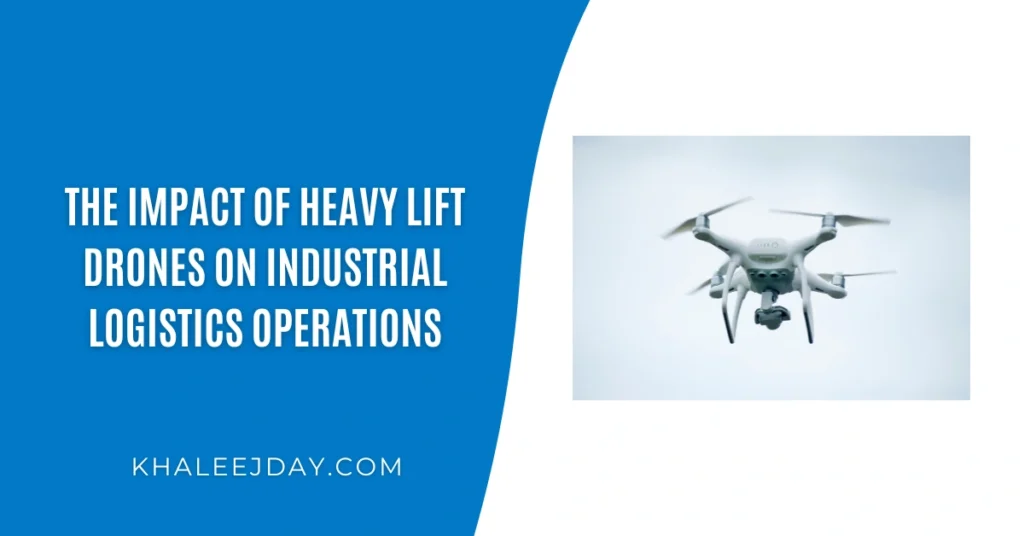
To solve these high-stakes challenges, industrial operators are turning to heavy-duty aerial technology. The deployment of a heavy lift drone is fundamentally transforming how industrial operations manage their supply chains. By utilizing specialized cargo drone services UAE, companies are establishing rapid, on-demand transport links that keep critical infrastructure running continuously.
Overcoming Terrestrial Obstacles in Extreme Terrains
Industrial operations are frequently located in some of the most challenging environments on earth. In the UAE, this includes deep-desert drilling reserves, rugged mountain quarries, and offshore energy platforms in the Arabian Gulf.
Traditional logistics in these areas are slow and complex:
- The Desert Challenge: Sending a heavy truck across soft, shifting sand dunes to deliver a critical replacement part can take several hours, consume massive amounts of fuel, and expose drivers to extreme heat.
- The Mountain Challenge: Winding mountain roads slow transport vehicles down to a crawl, making deliveries unpredictable and dangerous during wet or dusty conditions.
- The Maritime Challenge: Reaching offshore platforms requires coordinating expensive supply vessels or booking manned helicopter charters, both of which require advanced scheduling and high operational costs.
Heavy-lift drones bypass these terrestrial obstacles entirely. By treating the sky as a direct-line corridor, these aircraft can fly straight to the destination, cutting delivery times by up to 80% and removing human drivers from hazardous environmental conditions.
The Engineering Behind Heavy-Lift Autonomy
For a drone to be useful in an industrial setting, it must go far beyond carrying small consumer parcels. It must be a rugged, heavy-duty industrial asset. Modern heavy-lift drones, like those engineered by LODD in the UAE, are designed to carry payloads ranging from 100kg to 250kg over long distances.
This requires advanced structural and mechanical engineering:
- Hybrid Propulsion: Combining electric vertical lift with fuel-efficient cruise engines to provide the necessary power to lift heavy payloads while maintaining a long operational range.
- Ruggedized Construction: Utilizing high-strength carbon-fiber composite materials to ensure the airframe is lightweight yet strong enough to handle industrial payloads.
- Thermal Management: Engineering specialized cooling systems to shield batteries and flight avionics from the extreme summer heat of the Middle East, which can exceed 50°C.
- Precision Control Systems: Utilizing advanced flight control algorithms to maintain perfect stability when carrying heavy, unevenly balanced, or wind-catching cargo.
Transforming the Economics of Industrial Supply Chains
By introducing autonomous heavy-lift systems, industrial operations can fundamentally restructure their economic models. Instead of keeping millions of dollars in duplicate “safety stock” at every remote site to prevent downtime, companies can centralize their spare parts inventories.
When a part is needed, it can be dispatched instantly via drone from a central hub, arriving at the remote site in a fraction of the time. This “just-in-time” approach reduces warehousing overhead, frees up capital, and ensures that facilities remain fully operational without the need for bloated local inventories.
Additionally, drones are highly cost-effective compared to traditional manned helicopter charters. They consume less fuel, require far less maintenance, and do not put human pilots at risk during night operations or in challenging weather.
FAQs
Q1: What payloads can heavy lift drones carry in industrial operations?
A: Industrial-grade cargo drones are built to carry heavy machinery components, drilling valves, geological sensors, medical kits, and specialized tools weighing up to 250 kilograms.
Q2: How do heavy lift drones handle high winds in remote areas?
A: They utilize powerful high-torque motors, variable-pitch propellers, and intelligent flight-stabilization software that constantly adjusts the aircraft’s attitude to counter wind gusts in real-time.
Q3: Are these drones safe to operate around high-voltage power lines or industrial rigs?
A: Yes. They are equipped with advanced electromagnetic shielding to prevent interference with industrial equipment, and their autonomous navigation systems utilize precise geofencing to maintain a safe distance from structures.
Q4: How does a cargo drone service integrate with existing industrial workflows?
A: Industrial operators partner with technology providers like LODD to integrate drone dispatch directly into their enterprise resource planning (ERP) systems, allowing parts to be dispatched automatically when an alert is triggered.
Q5: Can these aircraft operate in dusty or desert environments?
A: Yes. Ruggedized industrial cargo drones are built with IP67-rated sealed avionics bays and specialized air filtration systems to prevent sand and dust from damaging internal electronics.
Conclusion
Heavy lift drones are no longer a future concept; they are active, high-value assets in the modern industrial supply chain. By utilizing a heavy lift drone to bypass geographic barriers and leveraging professional cargo drone services UAE, industrial operators can achieve a level of safety, speed, and cost-efficiency that was previously impossible. As global trade and industrial complexity continue to grow, the adoption of autonomous, heavy-lift transport will be the defining factor in maintaining operational uptime and a competitive edge.