Why Is Dubai Attracting Freelancers?
Dubai is attracting freelancers because it offers something that many traditional job markets do not: the chance to build an independent career in a city designed around international business. The appeal is not only about taxes, although the UAE’s lack of personal income tax is obviously part of the equation. For many freelancers, the real attraction is the combination of residency options, strong infrastructure, global clients, easy networking, international flights, an English-speaking business culture, and the possibility of living in a place where independent work is increasingly treated as normal rather than as unstable or temporary.
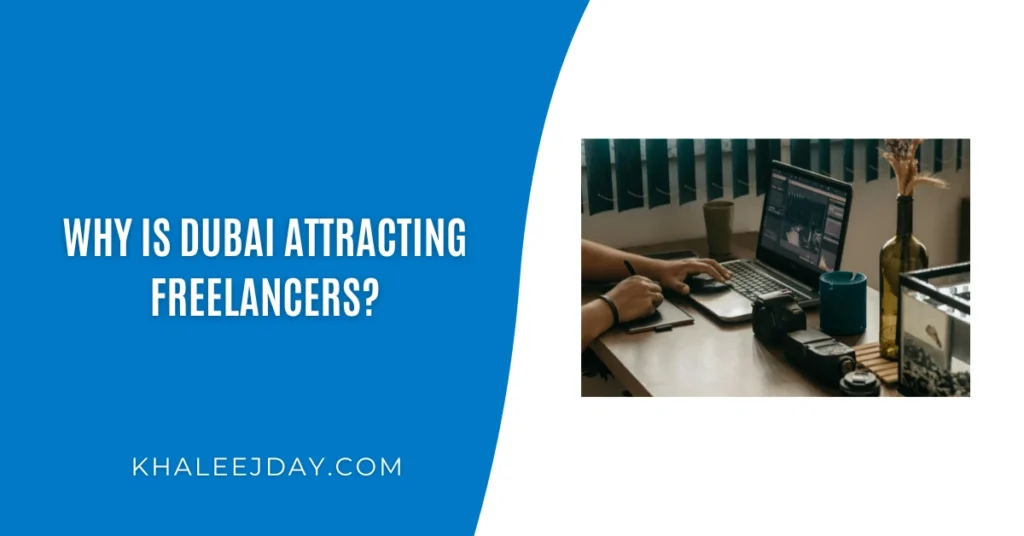
What I find interesting is that freelancers moving to Dubai often differ from the stereotypical digital nomad working from a beach café in Bali. A lot of them are consultants, developers, marketers, designers, content creators, agency owners and online entrepreneurs who already have established clients before they arrive. They are not necessarily looking for the cheapest place to live. They are looking for a city where they can earn more, meet useful professional contacts, open doors to Middle Eastern clients and operate from a time zone that works surprisingly well between Europe and Asia.
The working environment has also become much easier for people who do not want a traditional office. Dubai has plenty of paid coworking clubs, but there are also many free coworking spaces in Dubai where you can work for a few hours without buying an expensive monthly membership. I have seen people working from libraries, hotel lobbies, cafés, malls and public business spaces, so being self-employed here does not automatically mean paying thousands of dirhams every month for an office.
Dubai Works Particularly Well for Freelancers Who Already Earn Well
This is probably the part that gets lost in social media videos about moving to Dubai. Dubai can be excellent for freelancers, but it is not necessarily a good place to become a freelancer from scratch.
If somebody already earns $5,000, $7,000 or $10,000 per month from international clients, the city can make a lot of sense. They may gain a better professional network, access to wealthy clients, efficient services and favourable taxation while still being able to absorb Dubai’s high housing costs.
Someone earning $1,200 per month has a completely different experience.
Rent alone can destroy the financial advantage. Add health insurance, transportation, visa costs, deposits and the temptation to participate in Dubai’s expensive social life, and the city quickly becomes uncomfortable on an unstable income.
That is why I would describe Dubai as increasingly attractive to high-earning independent professionals, rather than universally attractive to all digital nomads.
Networking Is a Bigger Reason Than People Realise
Freelancers normally struggle with one major problem: finding the next client.
Dubai is unusually good at putting people who buy services in the same rooms as people who sell them. Business Bay, DIFC, JLT, Dubai Internet City and the free zones are full of startups, agencies, investors, consultants, technology companies and regional offices.
You can go to a business event and meet a founder who needs marketing, a property company that needs video production, and a startup looking for a developer in the same evening.
That density matters.
Working remotely from a cheap destination can reduce expenses, but it does not necessarily increase your income. Dubai can do the opposite. Your monthly costs may go up, but your access to higher-paying clients can improve significantly if you actually network.
This is one reason the city attracts freelancers who think more like business owners than travellers.
The Time Zone Is Surprisingly Useful
Dubai sits in a very convenient position between Europe and Asia.
A freelancer with clients in London can work with them during normal Dubai afternoons. Someone dealing with India is only a small time difference away. Singapore and other Asian markets remain manageable as well.
For consultants or agency owners working across several regions, this is a practical advantage that does not sound particularly exciting until you have tried managing clients across eight or ten hours of time difference.
Dubai also has an enormous international airport. If a client meeting suddenly requires travelling to London, Mumbai, Riyadh or Singapore, there are usually straightforward connections.
That mobility is valuable when your income depends on relationships rather than one employer.
Taxes Matter, but They Are Not the Whole Story
The sentence everyone hears is that Dubai is “tax free.”
That description is too simplistic.
The UAE does not impose personal income tax on individuals, which can obviously be attractive to freelancers coming from countries with high personal tax rates. However, self-employed people still need to think about business structure, licensing, corporate tax rules, VAT where applicable, and their tax residency in other countries.
Simply arriving in Dubai does not magically erase every tax obligation you previously had.
Still, for somebody who structures their affairs correctly and genuinely becomes a UAE tax resident, the difference in disposable income can be substantial. That is especially noticeable for freelancers whose income has already grown into the higher tax brackets of their home countries.
It Is Relatively Easy to Build an International Life Here
Another advantage is how little cultural adjustment is required professionally.
You can work almost entirely in English.
Your clients may be British, Indian, American, Lebanese, German or Saudi. Your accountant may come from another country entirely. Your neighbours probably will too.
Dubai is built around people arriving from somewhere else.
For freelancers, that removes some of the social friction that can exist when moving to a country where business depends heavily on the local language or long-established local networks.
You are still an outsider, but almost everybody else is an outsider too.
The Infrastructure Is Extremely Reliable
For independent workers, boring things matter.
Reliable internet matters.
Electricity matters.
Deliveries matter.
Banking matters.
Being able to get a taxi at 1 a.m. matters.
Having cafés open late matters.
Dubai is good at these things.
If your income depends on being online every day, infrastructure failure is not an interesting cultural experience. It is lost money.
That reliability is one reason freelancers who have spent time in cheaper nomad destinations sometimes move to Dubai after their businesses become more serious. They are willing to spend more in exchange for fewer interruptions.
There Is a Downside: Dubai Makes Spending Money Very Easy
The same city that makes working convenient also makes lifestyle inflation incredibly easy.
A freelancer arrives earning a perfectly respectable income and suddenly starts paying for a more expensive apartment, taxis instead of public transport, brunches, delivery food, beach clubs and networking events.
Within a few months, the supposedly tax-efficient move can become financially pointless.
This is probably the biggest contradiction of freelancing in Dubai.
You can potentially keep more of what you earn, but the city constantly gives you opportunities to spend it.
Someone disciplined with money can benefit enormously. Someone who starts copying the lifestyle displayed around Marina or Downtown may discover that earning more has not actually resulted in saving more.
Dubai Also Gives Freelancers More Independence From Employers
Traditional employment in Dubai often ties residency closely to an employer, although the UAE has gradually introduced more flexible residence routes.
For freelancers, having a permit, business structure or suitable self-sponsored residency can provide a different kind of independence. Losing one client does not necessarily mean losing your entire professional identity in the city.
Many freelancers became self-employed specifically because they did not want their income controlled by one company. Others arrive in Dubai after discovering how competitive the local employment market can be, deciding that continuing to work for international clients offers far more flexibility than searching for a traditional office role.
So Why Is Dubai Attracting Freelancers?
Dubai is attracting freelancers because it has evolved from a place people moved to primarily for corporate jobs into a city where independent professionals can build serious businesses. The absence of personal income tax gets most of the attention, but the larger advantage is the ecosystem around it: international clients, excellent infrastructure, business events, global flights, English-speaking professional life and a huge population of entrepreneurs and decision-makers.
The catch is that Dubai works best once the freelance business is already working.
If your income is inconsistent, the city can become stressful very quickly. If you already have stable international clients and want to increase your network, operate globally and potentially keep more of what you earn, Dubai starts to make much more sense.
That is probably why the freelance population here feels different from many classic digital nomad destinations. People are not necessarily coming to Dubai because they want to work less.
A lot of them are coming because they want to turn freelancing into something bigger.